
The pact between Saudi Arabia, Pakistan and Türkiye is a step towards a new regional security architecture in which the post-American Middle East is beginning to take shape.
The recently concluded Mecca Joint Defence Agreement between Saudi Arabia, Pakistan and Türkiye provides for collective defence, strategic political and military coordination, joint exercises, intelligence cooperation and deeper defence-industrial collaboration. Türkiye has also indicated that the arrangement could eventually be expanded to other states. (1)
For the Gulf states, however, the significance of this development should not be reduced to the creation of another military alliance. Its deeper importance lies in the possibility of moving from a security order based primarily on an external guarantor towards one in which regional states themselves possess the capabilities, institutions and political mechanisms necessary to defend their interests. The objective should not be to eliminate the United States from the Gulf, nor to replace Washington with another outside power. Rather, it should be to end the structural dependence on any single external power for the organisation of regional security. (2)
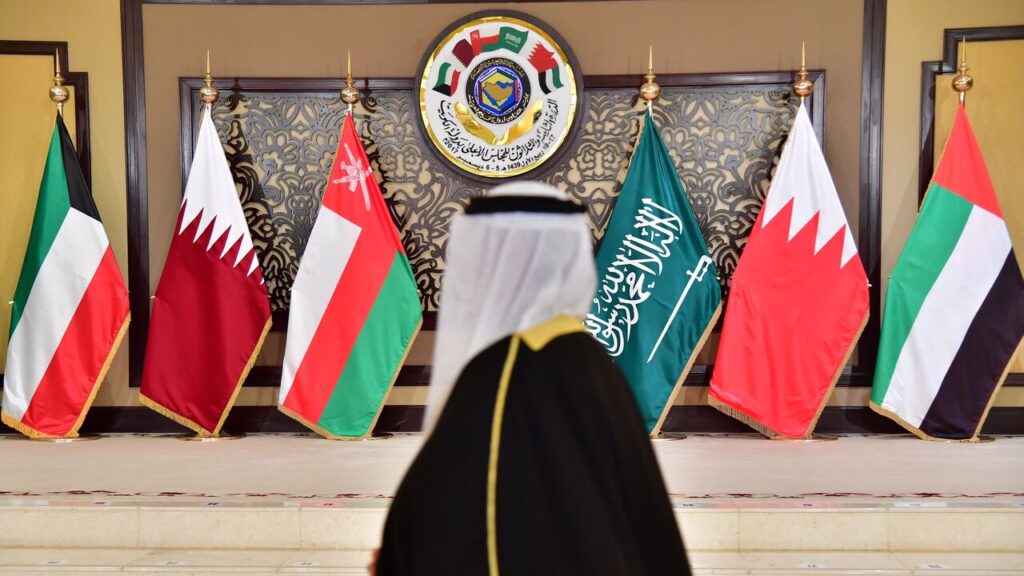
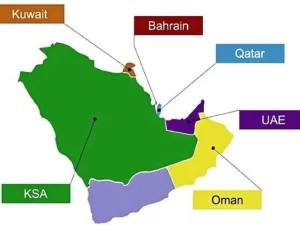
The six Gulf Cooperation Council (GCC) states—Saudi Arabia, the United Arab Emirates, Qatar, Kuwait, Bahrain and Oman—therefore need to transform the GCC from primarily a political and economic organisation into the institutional foundation of a genuine collective-security system. None of the six states, regardless of its wealth or military sophistication, can independently provide the full spectrum of capabilities required to deter a major regional power. Collectively, however, they possess enormous financial resources, advanced technology, strategic geography, significant armed forces and extensive diplomatic networks. The challenge is to turn these separate national assets into a coherent regional capability. (3)
From national defence to collective defence
The first requirement is a fundamental change in strategic thinking. Gulf states have traditionally invested heavily in their individual armed forces, purchasing sophisticated aircraft, missile-defence systems, naval platforms and other equipment from external suppliers. Yet the possession of advanced weapons does not automatically create strategic autonomy. A collection of highly capable national militaries can still remain strategically dependent if they lack integrated command structures, common doctrines, interoperable communications and the ability to sustain operations independently. (4)
The Gulf states should therefore establish a permanent GCC Joint Defence Command with authority to coordinate air, missile, naval, cyber and space operations. This should not necessarily replace national armed forces. Instead, national forces should remain under sovereign command while assigning designated units and capabilities to a regional command during agreed contingencies.
The principle should be simple: an attack on one Gulf state should immediately trigger a coordinated regional response. Such a system would create deterrence through uncertainty for any potential aggressor. Rather than calculating the military strength of an individual Gulf state, an adversary would have to consider the combined capabilities of the entire GCC.
The Saudi-Pakistani-Turkish agreement demonstrates the value of collective commitments, but the Gulf states should go further by creating a genuinely institutionalised regional system rather than relying primarily on bilateral agreements. The existing agreement between Saudi Arabia and Pakistan, signed in September 2025, already elevated their longstanding defence relationship, while the newer trilateral arrangement creates a wider framework for cooperation. The GCC should connect these external partnerships to its own collective defence structure. (5)
Build an integrated air and missile-defence system
The most urgent military priority should be the creation of an integrated Gulf air and missile-defence network.
The geography of the Gulf makes this particularly important. The relatively small distances between Gulf capitals and critical energy infrastructure mean that national air-defence systems cannot provide complete protection when operating independently. An incoming missile or drone does not respect national borders, and neither should the regional response. (6)
The GCC should therefore establish a common early-warning network connecting radar systems, satellites, airborne sensors, naval platforms and intelligence services. Data should be shared in real time through a secure regional command network.
The objective should be a “Gulf air picture”—a common operational picture that allows commanders to see and respond to threats across the entire region. Over time, the Gulf states should also develop common procurement standards for air-defence systems. Instead of each country purchasing different systems from different suppliers, future acquisitions should prioritise interoperability.
The region should also invest heavily in counter-drone technology, electronic warfare, cyber defence and low-cost defensive systems. A sophisticated missile interceptor cannot economically be the answer to every inexpensive drone or missile threat. Strategic autonomy requires not merely buying more weapons but developing a sustainable system capable of defeating threats at an acceptable cost. (7)
Create a unified maritime-security architecture
The Gulf’s security is inseparable from the security of its maritime environment. The Strait of Hormuz, the Gulf of Oman, the Red Sea and the wider Arabian Sea connect Gulf economies to global markets. Any disruption to these waterways can rapidly become an economic and strategic crisis.
The Gulf states should therefore create a GCC Maritime Security Command responsible for coordinating naval forces, coast guards, maritime surveillance and protection of critical infrastructure. This should include shared maritime-domain awareness, common patrol procedures and joint exercises. Ports and naval facilities should also be developed according to common standards so that ships from different GCC states can operate from one another’s facilities.
The aim should not be the militarisation of every maritime dispute. Instead, a regional maritime-security system should combine deterrence with crisis management.
The Gulf states should also cooperate with Türkiye, Pakistan and Egypt, whose geographic positions provide strategic depth beyond the immediate Gulf. Existing regional consultations involving Türkiye, Egypt, Pakistan and Saudi Arabia have already emphasised collective security and the importance of protecting regional stability and maritime routes. (8)
Establish a Gulf intelligence and cyber-security community
Military power in the twenty-first century is no longer measured simply by tanks, aircraft and ships. Intelligence, cyber capabilities, satellites, artificial intelligence and electronic warfare are becoming equally important.
The GCC should therefore establish a regional intelligence-sharing mechanism with permanent institutions rather than relying on ad hoc exchanges between national services.
A Gulf Intelligence Fusion Centre could analyse information concerning missile launches, drone activity, terrorism, cyberattacks, maritime threats and foreign military movements. Artificial intelligence could be used to identify patterns and provide early warning, while national agencies would retain responsibility for sensitive intelligence and domestic security.
Cybersecurity deserves particular attention because Gulf economies depend heavily on digital infrastructure. Energy facilities, airports, ports, financial systems, telecommunications networks and government institutions represent strategic targets.
The GCC should establish common cyber-defence standards and a joint rapid-response capability able to assist any member state suffering a major cyberattack.
This would be an important element of strategic autonomy because cyber capabilities can be developed regionally without requiring the same enormous financial and industrial resources associated with conventional military platforms.
Develop a Gulf defence industry
No regional security architecture can be genuinely autonomous if its military forces remain completely dependent on foreign suppliers for ammunition, spare parts, maintenance, software and upgrades. The Gulf states should therefore establish a common defence-industrial strategy.
Saudi Arabia and the UAE have already invested heavily in developing domestic defence industries. Rather than maintaining parallel national programmes, they should increasingly specialise and integrate them into a regional industrial base.
One state might concentrate on drones, another on missiles, another on naval systems, another on electronic warfare, while others specialise in maintenance, logistics, ammunition or military software. The goal should be a Gulf defence-industrial ecosystem capable of sustaining military operations during a prolonged crisis.
Türkiye and Pakistan could play major roles in this process. Türkiye brings substantial experience in drones, naval systems, missiles, electronic warfare and defence manufacturing, while Pakistan provides significant military expertise and a long-standing defence relationship with Saudi Arabia. The new trilateral agreement explicitly identifies defence-industrial cooperation, technology transfer, joint exercises and advanced technologies as areas for cooperation. But the Gulf states should avoid simply replacing dependence on American suppliers with dependence on Turkish, Pakistani, European or Asian suppliers. Strategic autonomy requires diversification and, ultimately, domestic capability. (9)
Create a regional defence fund
Collective security requires collective financing. The wealthier Gulf states should establish a permanent GCC Defence and Security Fund financed according to an agreed formula based on economic size and national resources. The fund could finance joint missile defence, satellites, intelligence infrastructure, cyber capabilities, maritime surveillance, military research and common military exercises. (10)
This would also address one of the weaknesses of the existing Gulf security system: the unequal distribution of military capabilities. Saudi Arabia and the UAE possess much greater military and financial resources than smaller states such as Bahrain, Kuwait or Oman. A collective fund would allow smaller members to benefit from regional capabilities without having to replicate expensive systems individually.
In effect, the Gulf states should stop thinking about defence expenditure exclusively as six separate national budgets and begin treating a portion of their defence spending as one regional strategic investment. (10)
Develop a common strategic doctrine
Weapons and institutions will not be enough. The Gulf states need a common strategic doctrine. This doctrine should define what constitutes an attack on the GCC, how collective defence would be activated, what military assistance each state is expected to provide and who has authority to coordinate a regional response. At the same time, the doctrine should make clear that the GCC is defensive rather than expansionist. (12)
This distinction is essential. A new Gulf security architecture should not become an instrument for intervention in neighbouring states or an alliance built around permanent confrontation with Iran. The Gulf states need deterrence, but deterrence works best when combined with diplomacy.
A credible regional security system should therefore combine military preparedness with a standing diplomatic mechanism for crisis management. (13)
Bring diplomacy inside the security architecture
One of the greatest weaknesses of previous Middle Eastern security arrangements has been the separation between military security and diplomacy.
The new architecture should integrate the two.
The GCC should establish a permanent regional security dialogue involving the six Gulf states, Iraq, Iran, Türkiye, Egypt and Pakistan, with additional participation from other regional states when appropriate.
The purpose would not be to create immediate political agreement. Rather, it would provide channels through which crises can be managed before they become wars.
The Gulf states should pursue confidence-building measures with Iran, including military hotlines, maritime incident-prevention mechanisms, notification of major military exercises and discussions on missile and drone threats. This is not inconsistent with strategic deterrence. Indeed, a state is more secure when it possesses both the capability to deter aggression and the diplomatic channels necessary to prevent miscalculation. A post-American regional order should therefore not mean a post-diplomatic order. (14)
Maintain external partnerships—but change their purpose
Moving away from the American security umbrella does not require severing relations with the United States.
This distinction is crucial.
The United States will remain an important military, technological and economic power, and Gulf states will continue to benefit from American technology, intelligence, training and investment. European and Asian powers will also remain important partners.
The objective should instead be to change the relationship from dependency to partnership. American forces should no longer be the indispensable foundation upon which Gulf security rests. They should become one component of a broader network in which the GCC possesses the primary responsibility for its own defence. (15)
The same principle should apply to relations with China, India, Türkiye, Pakistan, Europe and other external powers. Gulf states should diversify their strategic partnerships rather than exchanging one dependency for another. This approach would also give Gulf states greater diplomatic freedom. A country that can defend itself collectively has greater freedom to pursue an independent foreign policy. (16)
Build the architecture in stages
The transformation cannot happen overnight. It should proceed through several stages.
The first stage should focus on political agreement: a binding GCC collective-defence protocol, common threat assessments and permanent military and intelligence institutions. The second stage should integrate existing capabilities, particularly air and missile defence, maritime surveillance and cyber defence. The third stage should focus on industrial autonomy through joint procurement, research, production and maintenance. The fourth stage should connect the GCC to wider regional partnerships with Türkiye, Pakistan and Egypt. Finally, the Gulf states should establish a broader regional security dialogue involving both allies and potential adversaries.
This phased approach is more realistic than attempting to create a “Middle Eastern NATO” immediately. The most important requirement is not a dramatic declaration but the gradual creation of institutions that can actually function during a crisis. (17)
Conclusion
The emerging Saudi Arabia–Pakistan–Türkiye security relationship represents an important signal that the Middle East is entering a period of strategic adjustment. Whether this becomes a durable regional security architecture, however, will depend less on the signing of individual defence agreements than on whether Gulf states can transform their considerable national resources into collective capabilities. Analysts have already identified the emerging cooperation among Saudi Arabia, Türkiye, Pakistan and Egypt as a potential new regional security framework, while also warning that differences among the participants and weak institutions could limit its development.
For the Gulf states, the answer should begin with the GCC itself.
They should establish collective defence, integrate air and missile defence, coordinate naval forces, share intelligence, build cyber and space capabilities, develop a regional defence industry, establish common financing mechanisms and create a diplomatic framework capable of managing crises with neighbouring states.
Most importantly, they should abandon the assumption that security can be purchased indefinitely from outside powers. The post-American Middle East should not mean a Middle East without America. It should mean a Middle East in which America is no longer the indispensable organiser of security.
The Gulf states possess the money, geography, technological capacity and political influence necessary to build such an order. What they have lacked is sufficient institutional integration and political willingness to pool their capabilities.
The strategic choice before them is therefore straightforward: remain six heavily armed but individually vulnerable states protected ultimately by external guarantees, or become a genuinely interconnected regional security community capable of defending itself.
The latter would represent a profound transformation of the Gulf’s strategic position. It would not eliminate external partnerships; it would make those partnerships a choice rather than a necessity. It would not guarantee the disappearance of conflict; it would make aggression considerably more difficult and crisis management considerably more effective.
Above all, it would place responsibility for Gulf security where it ultimately belongs: with the Gulf states themselves. That is the real meaning of a post-American regional order—not the departure of the United States, but the emergence of a Gulf that no longer depends upon American power to organise its security.
References
- Gulf Cooperation Council (GCC). The GCC Joint Defence Agreement and Unified Military Command. GCC Secretariat General. This provides the institutional background for GCC defence integration and the development of the Unified Military Command.
- Reuters. (2026, August 7). Saudi Arabia, Turkey, Pakistan pledge mutual defence as Middle East turmoil escalates. Reuters. This is the principal current reference for the Mecca Joint Defence Agreement and its mutual-defence commitment.
- Reuters. (2026, August 13). Turkey lays out plans for defence pact with Pakistan and Saudi Arabia. Reuters. This provides details on the proposed political and military mechanisms, joint exercises, advanced technologies, unmanned systems, electronic warfare, artificial intelligence and defence-industrial cooperation.
- Al Jazeera. (2026, August 7). Türkiye, Saudi Arabia, Pakistan sign joint defence agreement: What’s in it? This provides additional background on the agreement and its potential implications for the regional security architecture.
- Atlantic Council. (2026, August 8). Why Saudi Arabia, Pakistan, and Turkey just signed a defense pact. The analysis examines the agreement’s significance for the emerging Middle Eastern security architecture and Pakistan’s growing role in regional security.
- Carnegie Endowment for International Peace. Wehrey, F., & Sokolsky, R. (2015). Imagining a New Security Order in the Persian Gulf. . This is particularly useful for the article’s argument that the Gulf requires a security architecture capable of reducing dependence on an external military power while addressing regional security collectively.
- Carnegie Endowment for International Peace. Adebahr, C. (2021). Collective Security in the Persian Gulf: Preparing for an Opening. The article discusses the distinction between collective defence and collective security and the importance of confidence-building, maritime security and regional dialogue.
- Carnegie Endowment for International Peace. Al-Ansari, M. J. (2009). The Case for a Collective Security Organization in the Gulf. This provides an earlier conceptual argument for a Gulf security organisation involving the GCC states and Iran.
- International Institute for Strategic Studies (IISS). Missile Defence Cooperation in the Gulf. IISS. This is useful for supporting the article’s argument for integrated Gulf air and missile defence, including the pooling of sensors and defensive capabilities.
- International Institute for Strategic Studies (IISS). (2026). Defending the Skies of the Arab Gulf States. IISS. This provides contemporary analysis of the Gulf’s air-defence requirements and the challenges posed by missiles and unmanned systems.
- Center for Strategic and International Studies. Cordesman, A. H. Security Challenges and Threats in the Gulf. This provides background on the Gulf’s strategic vulnerabilities and the importance of integrated regional defence capabilities.
- Center for Strategic and International Studies. Cordesman, A. H. The Gulf and the Challenge of Missile Defense: Net Assessment Indicators. This supports the argument that Gulf missile defence should be considered as an integrated regional problem rather than six separate national problems.
- Carnegie Endowment for International Peace. The Middle East Strategic Alliance Has a Long Way to Go. This analysis is useful for examining the political and institutional difficulties involved in creating a new Middle Eastern security architecture and the limitations of externally driven alliance structures.
- Carnegie Endowment for International Peace. Imagining a New Security Order in the Persian Gulf. This source is particularly relevant to the article’s conclusion because it examines collective defence, regional security regimes, GCC limitations and possible models for a new Gulf security order.
- Saudi Ministry of Foreign Affairs. Saudi-Pakistan Strategic Defence Agreement. The official Saudi source provides background on the longstanding Saudi-Pakistani defence relationship and its development into a more formal strategic partnership.
- Republic of Türkiye, Ministry of Foreign Affairs. Statements concerning Türkiye-Saudi Arabia-Pakistan security cooperation. These provide an official perspective on the objectives and defensive character of the emerging trilateral security relationship.
- Carnegie Endowment for International Peace. The Case for a Collective Security Organization in the Gulf. This source is especially relevant to the article’s proposal for combining GCC collective defence with a wider regional security dialogue involving Iran and Iraq.