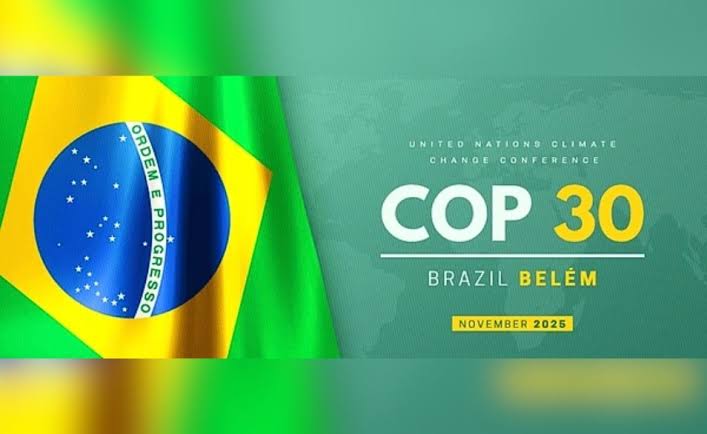
The 30th Conference of the Parties to the UN Framework Convention on Climate Change (COP30), to be held in Belém, Brazil, from 10 to 21 November 2025, arrives at a critical inflection point in global climate diplomacy. The choice of venue in the Amazon region underscores the stakes—not just symbolically but substantively: the Amazon is both a linchpin in Earth’s carbon and hydrological cycles and a frontline for climate impacts such as deforestation, wildfire, biodiversity loss, and regional climate disruption. The summit is not merely a ritual of negotiation; it is a moment for stocktaking, course correction, and re‐anchoring political will behind the 1.5 °C target enshrined in the Paris Agreement. (1)
This paper examines five interlocking dimensions: (1) the geopolitical context in which COP30 will unfold, (2) expected outcomes and what success might look like, (3) the status and challenges of climate finance following COP29, (4) the shifting landscape of global climate leadership, and (5) a concluding assessment of the challenges ahead.
- Geopolitical Circumstances of COP30 Multipolar tensions and multilateral strain
The global geopolitical landscape in 2025 is marked by intensifying multipolar tensions, fracturing multilateralism, and deepening strategic rivalry—particularly among the United States, China, the European Union, and the growing influence of middle powers such as India, Brazil, and various African nations. COP processes have long required consensus, but fault lines over sovereignty, burden-sharing, the role of private finance, and trade policies are more pronounced than ever. Scholars warn of weakening coalitions, free-riding behavior, and strategic disengagement by key emitters.
Moreover, in some accounts, COP30 may be the first climate summit in which “strong U.S. engagement” is absent, with Washington’s announced intention to withdraw from the Paris Agreement in 2026 looming large.
In that context, Brazil—a Southern hemisphere, tropical, forested country—faces the heavy burden of mediating conflicting agendas, bridging the interests of developed and developing nations, and reclaiming moral authority in climate diplomacy. (2)
Brazil’s role is particularly delicate. It must navigate domestic political pressures, especially concerning Amazon governance, infrastructure projects, and agricultural interests, while projecting a credible platform for climate justice abroad. The appointment of veteran diplomat André Corrêa do Lago as COP30 President signals Brazil’s intent to pursue a technocratic, bridging style of leadership. (3)
Disinformation, legitimacy, and climate narratives
Another axis of geopolitical contestation is the politics of information. The COP30 presidency has explicitly flagged climate disinformation as a systemic threat to multilateral progress, elevating it as a negotiation issue. In an era where climate denial, delayed skepticism, and strategic misinformation campaigns are coordinated at multiple levels (domestic, transnational, digital), trust in scientific data and modelling is under renewed pressure. This is not just a public communications challenge, but a negotiation hazard: parties may dispute baseline emissions, offsets credibility, or conditionality on finance flows. (4)
Legitimacy around the climate regime is also contested. Many Global South nations question whether the dominant paradigm of emissions reduction, carbon markets, and financialized solutions perpetuates colonial dynamics. As some observers argue, COP30 is an opportunity for the Global South to “claim the climate mantle,” repositioning leadership away from Northern powers. This implies that debates over justice, equity, historical responsibility, and differentiated capacities may be more heated and less deferrable. (5)
Economic headwinds, trade and technology constraints
COP30 also unfolds amid global economic fragility: inflationary pressures, supply chain disruptions, energy security anxieties, and trade frictions figure prominently. The COP30 presidency has warned that proposed U.S. tariffs or trade wars could impair developing countries’ access to crucial clean technologies.
The risk is real: climate transitions depend critically on the diffusion of low-carbon technologies (renewables, green hydrogen, storage, carbon capture, materials substitution). Trade restrictions or export controls could stall deployment or raise costs in vulnerable countries. Furthermore, many developing economies are still grappling with debt distress, constrained fiscal space, and overlapping crises (food, energy, migration). These conditions reduce their ability to plan large decarbonization investments or absorb climate shocks, which in turn weakens their negotiating posture. (6)
Regional dynamics, forest diplomacy, and Amazon visibility
Because COP30 is held in the Amazon, forest conservation, forest finance, and “nature-based solutions” will command outsized attention. Brazil hopes to anchor tropical forest protection as a central pillar of the COP agenda. The Brazilian government is promoting a flagship instrument—the Tropical Forest Forever Facility (TFFF), a blended finance scheme with a $125 billion ambition to reward forest conservation, reforestation, and sustainable land use. But Amazon governance is itself highly politicized. Questions of land rights, deforestation enforcement, indigenous rights, infrastructure corridors, and agricultural expansion will be under intense scrutiny. Failure or perceived hypocrisy in Brazil’s domestic policy could undercut the COP’s moral authority from the outset. (7)
- What to Expect and What Might Be Achieved at COP30
Given the complexities above, what outcomes might be within reach—and which are aspirational?
Submission and upgrading of NDCs (the “3.0 NDCs”)
One of the central tasks for countries ahead of COP30 is to submit updated Nationally Determined Contributions (NDCs), sometimes referred to as “3.0 NDCs.” These NDCs should reflect more ambitious emissions reductions, strengthened sectoral policies, adaptation plans, and clarity on support needs. Indeed, by April 2025, only 19 countries had submitted new or updated NDCs—suggesting that many governments are still grappling with the political, technical, and financial challenges of enhancing climate ambition. (8)
At COP30, parties will be pushed to present NDCs consistent with 1.5 °C pathways, or at least demonstrate credible pathways for further ratcheting. A successful outcome would be a collective package of NDCs whose aggregated emissions trajectories lower the gap to 1.5 °C, even if they do not close it entirely.
Advancing climate finance architecture and operationalizing the NCQG
COP29 established a New Collective Quantified Goal (NCQG): developed countries should mobilize at least US$300 billion annually by 2035 for climate action in developing countries, and all actors—public and private—should work toward US$1.3 trillion per year by 2035.
But COP30 must move from aspiration to implementation: agreeing on modalities, burden allocation, grant vs. loan balance, transparency and tracking, eligibility criteria, and triggers for escalation. In other words, COP30 is likely to be a stage for the “Baku to Belém Roadmap to 1.3T.”
The TFFF may emerge as a signature deliverable, potentially attracting commitments from sovereign funds, philanthropic institutions, and multilateral partners in Belém. If Brazil can secure early anchor funding, TFFF may be positioned as a proof-of-concept for leveraging public funds into forest conservation pay-for-performance instruments. (9)
Strengthened adaptation, loss & damage, and resilience frameworks
Given mounting climate impacts, COP30 will likely seek to advance operational modalities for adaptation funding, loss and damage mechanisms, and technical capacity building. Many developing countries will press for disburseable instruments with minimal conditionality and fast access, not just theoretical pledges. The existing Loss and Damage Fund, established earlier, may see calls for scaling, disbursement rules, and replenishment. In addition, COP30 could feature strengthened commitments to climate resilience, early warning systems, climate risk insurance, and nature-based adaptation. The water dimension may gain more traction; COP29 introduced a “Baku Dialogue on Water for Climate Action” as a continuing platform. (10)
Institutional reform, financial architecture and private sector leverage
COP30 may push conversations about reforming international finance architecture: the roles of multilateral development banks (MDBs), the Green Climate Fund, regional banks, and domestic development banks. Delegates may explore mechanisms to de-risk private investment, expand concessional instruments, incorporate climate risk in credit ratings, and integrate climate criteria into central banking and sovereign debt frameworks.
Further, COP30 could maneuver toward binding standards for carbon disclosures, climate risk accounting, and harmonized taxonomies, reducing fragmentation in the climate finance landscape. This may also include efforts to ensure private finance flows are additional to—and not a substitute for—public commitments. (11)
A stronger COP outcome on fossil fuel phase-down
While the financial agenda looms large, COP30 may also revisit the contested terrain of fossil fuel phase-down, just transition, and phase-out of coal, oil, and gas. COP28 and COP29 laid some groundwork in energy transition and fossil fuel discussions. COP30 may be pressured to produce a sharper language, a roadmap or timeline, and stronger commitments—particularly from high-emitting countries or blocs. A credible outcome would include stronger sectoral targets (power, industry, transport), phasing out subsidies for fossil fuels, and just transition support for labor and communities dependent on carbon-intensive industries.
Monitoring, compliance, and transparency enhancements
COP30 is likely to emphasize enhanced monitoring, reporting and verification (MRV) mechanisms; standardized climate accounting; and compliance support. The global stocktake process might also be refined to incentivize higher ambition, trigger escalation pathways, and link review outcomes to concrete COP decisions.
Political signaling and side deals
COP30 may generate high-level political declarations, alliance-building among like-minded coalitions (e.g., climate clubs, regional blocs, forest coalitions), side agreements or partnerships (e.g., just transition pacts, clean energy hubs, nature-based finance alliances), and bilateral or multilateral project pledges. While these are not legally binding, their signaling value can influence markets, investment, and reputations.

- Progress and Challenges on Climate Finance Since COP29 The NCQG: promise vs. practicality
The NCQG represented a meaningful escalation: from the long-standing (though contested) US$100 billion annual target to US$300 billion by 2035, with a broader goal of $1.3 trillion mobilized from all sources. Observers welcomed the ambition, but warned that the “how” is deeply underdeveloped. Critically, COP29 left unresolved many design questions: which institutions will channel funds, how to allocate among countries, how to ensure grant versus concessional balance, how to ensure additionality (i.e. not rebranded development aid), and how to structure tranches of mobilization (public, private, blended).
One of the core criticisms is that the pledged $300 billion is woefully short compared to the estimated needs. According to the Global Landscape of Climate Finance 2024, climate flows remain far below the trillions required annually—from US$6.7 to 10 trillion per year through 2050. Some analyses suggest the $300 billion target would cover barely 10% of the financing gap for developing countries (excluding China) by 2030. (12)(13)
Early pledges, institutional signals, and shortfalls
Since COP29, several governments and financial institutions have made moves to align with the new regime, but not at a scale to match rhetoric. For instance, the U.S. International Development Finance Corporation (DFC) committed over $3.7 billion in new climate finance in fiscal year 2024. Multilateral development banks have reiterated climate lending targets, private climate funds continue to proliferate, and some philanthropic initiatives aim to catalyze high-risk finance. (14)
Still, analysts caution that much of the early mobilization is redeployment of existing pledges, repackaging of spending, or instruments that still carry commercial risk. The multiplicity of funds and overlapping mandates often leads to fragmentation, high transaction costs, and limited coherence.
Another critical challenge is the balance of grant vs. loan funding. Many developing countries resist high-debt instruments or conditional finance, especially when climate impacts are beyond their control. Yet much of the private capital mobilized tends to be debt- or leverage-based, which raises questions about fairness, risk, and debt stress. (15)
Transparency, tracking, and credibility
A perennial problem is the tracking of climate finance flows. “Climate labeling” of projects is sometimes elastic and inconsistent. Ensuring that finance is additional to development assistance, not substitutive, remains contentious. Without robust tracking and verifiable attribution, trust erodes among vulnerable parties.
In addition, there is asymmetry in capacities: many developing nations lack the institutional or technical systems to absorb and report funds, further exacerbating inequalities in access and implementation.
Mobilizing private and de-risking instruments
The NCQG explicitly calls on “all actors” to mobilize funds, embracing public-private instruments, guarantees, blended finance, green bonds, and other de-risking tools. Yet catalytic capital, risk mitigation, and credit enhancements must be sufficiently scaled to attract private capital flows into sectors like clean energy, storage, grid modernization, nature-based solutions, adaptation infrastructure, and resilience.
The fragility of voluntary private commitments has been exposed by backsliding institutions and regulatory pushback. For instance, the Net-Zero Banking Alliance (NZBA), once heralded as a voluntary global banking coalition for climate alignment, has recently seen withdrawals and waning confidence. This serves as a cautionary reminder that public safeguards, accountability, and regulatory anchoring may be indispensable. (16)
Liability, loss & damage funding, and justice
Many developing countries emphasize that climate finance must include mechanisms for loss and damage—compensation or restitution for climate impacts that cannot be adapted to. COP30 may see pressure to scale the standing Loss and Damage Fund, make it more accessible, and allocate resources based on risk profiles rather than projections.
Another justice dimension is ensuring that climate finance supports the most vulnerable (e.g., least-developed countries, small island states, Indigenous communities) and avoids locking them into dependency or exploitative financing models.
- The Future of Global Climate Leadership
COP30 may signify a transformative shift in how climate leadership is understood, redistributed, and institutionalized.
From Northern hegemony to Southern agency
Brazil’s hosting and agenda setting suggest a potential realignment: from a climate regime dominated by Northern countries and fossil-economy powers to one more oriented toward the Global South and tropical regions. Some analysts frame COP30 as an inflection point where climate leadership might shift toward countries with strong forest assets, nature-based mitigation potential, and deep climate justice credentials. If Brazil and other tropical nations succeed in steering negotiations and delivering forest finance mechanisms (e.g. TFFF), that could recalibrate the authority and legitimacy of climate diplomacy.(17)
Coalitions, climate clubs, and differentiated blocs
In the face of systemic fragmentation, coalition-based leadership (e.g. climate clubs, regional pacts, thematic alliances) may become more central. Coalitions of high-performing countries may set norms and standards that others join, effectively bypassing slow UN-level consensus. Recent modeling suggests that technology-sharing, rather than punitive sanctions, may better sustain larger coalitions over time.
Expect more dynamic bloc diplomacy at COP30: alliances of tropical forest nations, just transition coalitions, clean-energy hubs, climate justice consortia, and regional platforms (Africa, Latin America, Pacific) asserting their narrative power.
Private sector, finance, and non-state actor leadership
Global climate leadership is increasingly diffuse. Subnational actors, cities, businesses, technology firms, philanthropic funds, indigenous organizations, and civil society groups now play indispensable roles. Their capacity to deliver innovation, finance, implementation, and legitimacy may surpass that of many states. COP30 may hinge on bridging formal negotiation with bottom-up action: linking government promises to deliverables by non-state actors.
In this evolving architecture, the capacity to mobilize capital, convene coalitions across sectors, and operationalize climate projects will define de facto leadership more than diplomatic seniority.
Technology, innovation, and tipping narratives
Future leadership will be partly technological: pioneering zero-carbon innovations, scaling low-cost decarbonization pathways, and sharing open-source models. Countries that master and export clean technology (renewables, storage, green hydrogen, direct air capture, bio-based materials) will command both normative and material influence.
Moreover, the language of climate tipping—and the urgency of preventing irreversible thresholds—imbues leadership with existential stakes. Science-driven urgency may re-anchor leadership around countries that embed tipping awareness into policy and diplomacy.
Risks of fragmentation, backsliding, and moral hazard
Yet leadership is precarious. Coalitions may shrink under free-riding pressures, as indicated in recent theoretical work. arXiv Without robust institutions, compliance mechanisms, and accountability, leadership initiatives may falter. Also, leadership that over-relies on offset markets or nature-based credits risks moral hazards or perverse incentives.
Finally, legitimacy is fragile: countries that deliver rhetorical leadership but fail in domestic policy (e.g. on deforestation or emissions) risk reputational backlash and undermining the global climate project.
- Conclusion: Building Hope and Momentum from the Heart of the Amazon
As the world gathers in Belém for COP30, there is reason for cautious optimism. The location itself—the Amazon, often called the “lungs of the Earth”—is more than symbolic; it embodies the interconnectedness of global ecosystems and human futures. The decision to convene the international community in the world’s largest tropical rainforest signals a shift in both geography and mindset: climate leadership is no longer confined to the industrial North but is being reclaimed by regions whose natural wealth and stewardship are essential to the planet’s balance.
COP30 has the potential to mark a new era in climate cooperation if it can turn rhetoric into structured, equitable financial action. The New Collective Quantified Goal, ambitious though it is, represents more than a number—it reflects a recognition that finance is the hinge on which global ambition turns. The development of mechanisms such as the Tropical Forest Forever Facility could anchor a new model of climate solidarity, one that rewards conservation, channels private capital into sustainable economies, and empowers local and Indigenous communities as the true custodians of the world’s natural assets.
Equally, the reconfiguration of global climate leadership provides an unprecedented opportunity. Brazil’s stewardship of COP30 can demonstrate that emerging economies can lead not through industrial dominance, but through innovation, inclusion, and ecological integrity. If Belém succeeds in bridging North–South divides, operationalizing fair climate finance, and presenting a credible pathway to 1.5 °C, it could re-energize trust in multilateralism at a moment when that trust is most fragile.
The challenges ahead are profound, yet COP30 offers a platform for collective renewal. In the heart of the Amazon, the world can reaffirm that the path to zero emissions is not merely about reducing carbon—it is about re-imagining shared prosperity, restoring faith in cooperation, and investing in the living systems that sustain all life. From Belém may emerge a message that echoes far beyond the rainforest: that hope, anchored in action, remains humanity’s most renewable resource.