
A 2030 Agenda Perspective: Challenges and Pathways for SDGs in the Arab Region
- Introduction:
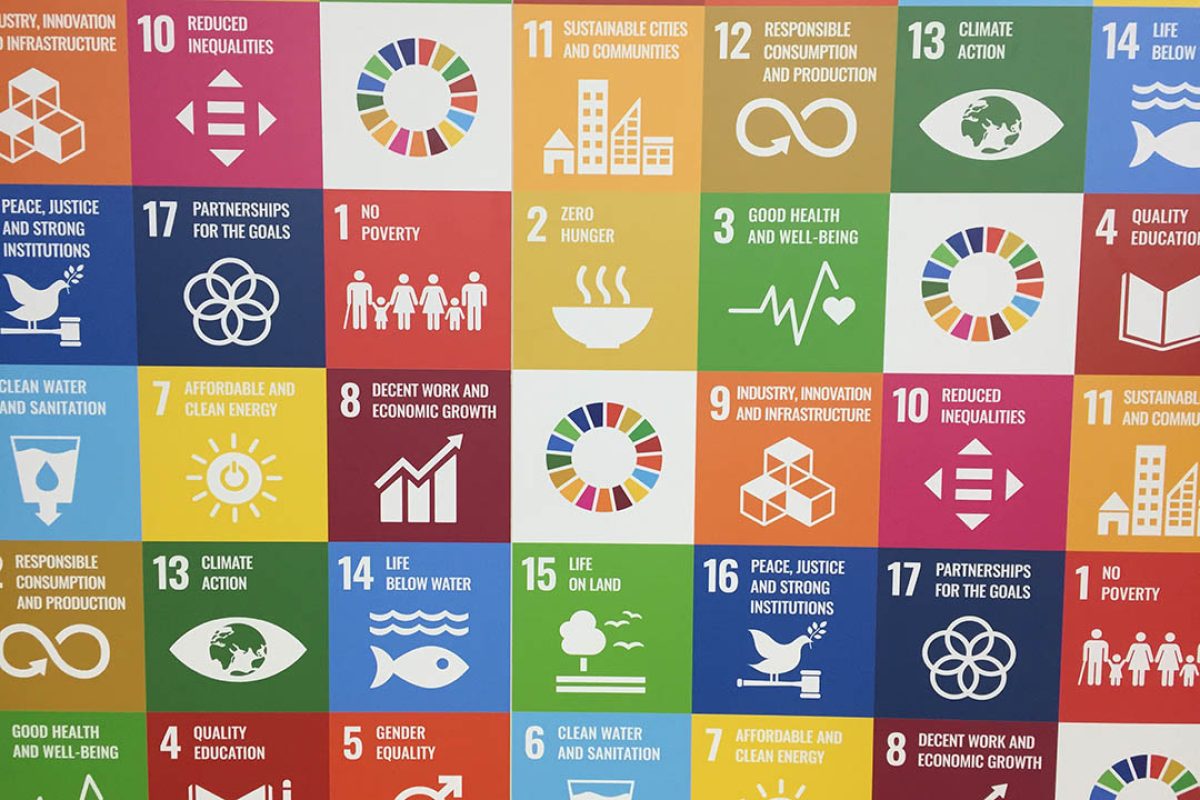
The year 2026 serves as a critical juncture for the Arab region. With only four years remaining until the 2030 deadline, the Arab Region SDG Index and Dashboards 2025 reveals a landscape of stark contrasts. While the regional average SDG score stands at 60.5 out of 100, this figure masks a critical gap between aspirations and reality as the world approaches the 2030 deadline. As the region navigates “cascading crises”—ranging from geopolitical instability to climate-induced water scarcity—the necessity for deeper economic integration and trade openness has moved from a policy recommendation to an existential requirement.
Sustainable development outcomes in the region vary widely — with high-income countries outperforming others, while low-income and conflict-affected states lag significantly behind. This paper examines these challenges, proposes strategies for accelerating progress, and emphasizes the importance of trade openness and economic integration as catalysts for sustainable growth.
- Overview of SDG Performance Across Arab States:
To understand the Arab world’s SDG performance, one must categorize the 22 Arab states by their socio-economic standing, as the report highlights vastly different trajectories:
High-Income States (GCC Countries)
Nations like the UAE, Saudi Arabia, and Qatar lead the regional index. Their progress is driven by robust digital infrastructure (SDG 9) and significant improvements in health (SDG 3) and education (SDG 4). These states have the fiscal space to invest in “Green Transitions. Their success often stems from better governance structures, stable GDP growth, and relatively robust public investment. However, they face specific challenges in SDG 12 (Responsible Consumption and Production) and SDG 13 (Climate Action) due to high per-capita carbon footprints and waste generation.
Middle-Income States
Countries such as Algeria, Egypt, Jordan, Morocco, and Tunisia have achieved at least two-thirds of the total SDG score. They present a mixed picture where they show resilience in basic service delivery but are currently hindered by SDG 8 (Decent Work and Economic Growth), specifically high youth unemployment, and SDG 17 (Partnerships), as rising debt-servicing costs (reaching record highs in 2025) limit their ability to fund sustainable projects.
Low-Income and Conflict-Affected States (LDCs)
The Least Developed Countries (LDCs), including Somalia, Sudan, Syria, and Yemen, remain far below the regional average and trail across many SDGs. For these nations, the 2030 Agenda is under threat from “reversing progress.” They struggle with SDG 2 (Zero Hunger) and SDG 1 (No Poverty), where conflict has obliterated infrastructure and displaced millions, creating a “development emergency.” Moreover, they often contend with conflict-related instability, weak institutions, and high poverty levels, leading to multiple red signals across the SDG Dashboards
- Major Regional Challenges to SDG Achievement
Conflict, Instability, and Weak Institutions (SDG 16)
Conflict remains one of the most profound obstacles in the Arab region, undermining governance, public service delivery, and economic activity. Countries affected by conflict exhibit extremely poor performance across multiple SDGs, particularly those related to poverty (SDG 1), health (SDG 3), and economic growth (SDG 8). Conflicts not only halted progress but caused regression in health and nutrition.
The Index highlights that SDG 16 — peace, justice, and strong institutions — scores especially low in many Arab states, hindering broader sustainable development outcomes.
Gender Inequality (SDG 5)
This remains the lowest-scoring goal across all Arab countries, regardless of income. Barriers to workplace participation and legal inequities represent a massive loss of human capital while indicating systemic barriers to women’s full participation in economic, political, and social life. Persistent cultural norms, and low political representation continue constraining progress.
Economic and Labor Market Constraints (SDG 8)
High unemployment — particularly among youth and women — remains a significant challenge in many Arab states. Middle-income states, while economically richer, often face structural unemployment, underemployment, and rigid labor markets that fail to absorb new entrants.
Food Insecurity and Unsustainable Agricultural Practices (SDG 2)
In nations like Yemen, Sudan, and Somalia, food insecurity driven by conflict, climate change, and weak agricultural sectors poses persistent barriers to SDG 2 progress.
Environmental Stress (SDGs 13–15)
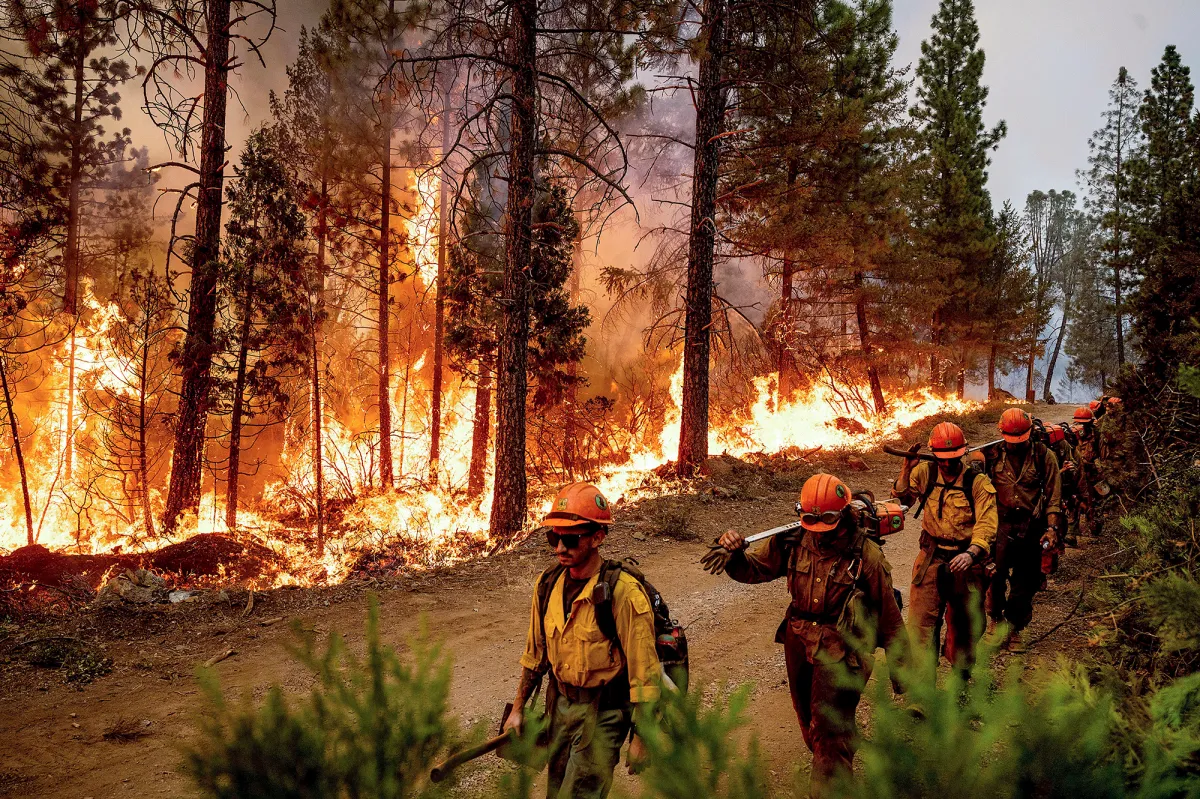
The region is the most water-stressed in the world. Climate change is exacerbating food insecurity, making SDG 2 (Zero Hunger) increasingly difficult to attain as arable land degrades. Furthermore, desertification and poor natural resource governance threaten long-term sustainability. Environmental goals related to managing ecosystems (SDG 14 and SDG 15) show significant delays, especially in countries with fragile institutional capacities.
Data Gaps (SDG 17)
Significant “blind spots” exist in measuring poverty (SDG 1) and inequality (SDG 10), hindering evidence-based policymaking while compromising the ability to track progress effectively. Without reliable data, governments cannot design reliable policies that target the most vulnerable populations.
- The role ofTrade Openness and Economic Integration in the Arab Region:
A central theme for overcoming these challenges is the modernization of the Pan Arab Free Trade Area (PAFTA). The 2025 report emphasizes that trade openness is not merely an economic tool but an SDG accelerator. In the Arab context, however, intra-regional trade remains underdeveloped despite long-standing frameworks intended to promote economic cooperation. Empirical research shows that economies with higher trade openness tend to grow faster and attain higher welfare levels, particularly when paired with robust institutions and logistics improvements. Yet in the Arab world, structural barriers — including similarity in export profiles (oil dominance), infrastructural deficits, and intraregional political fragmentation — have dampened potential gains from integration. Therefore, greater trade openness and economic integration can:
Enhance Regional Value Chains
Currently, intra-Arab trade remains lower than its potential. By integrating supply chains, high-income states can provide the capital and technology, while middle-income states provide the manufacturing base and human resources. This synergy is vital for SDG 9 (Industry and Innovation).
Strengthen Digitalization
The implementation of “National Single Windows” (digital customs platforms) has shown success in countries like Jordan. Expanding this regionally can reduce the “cost of distance,” facilitating the flow of essential goods like food and medicine, directly impacting SDG 2 and SDG 3.
Foster Trade as a Resilience Mechanism
For conflict-affected and low-income states, integration into regional markets provides a “lifeline.” Open trade allows for the more efficient distribution of resources during climate shocks or food shortages, building the “resilience” that is the core theme of the 2025 report.
Key Regional Initiatives
- Greater Arab Free Trade Area (GAFTA)
GAFTA was established in 1997 to progressively reduce tariffs and eliminate non-tariff barriers among Arab League members, aiming to foster regional trade. However, it has had limited impact due to administrative bottlenecks, high non-tariff barriers, and narrow product diversification — factors that have kept intra-Arab trade levels low relative to global benchmarks.
- Arab Customs Union and Common Market Efforts
In 2009, leaders announced a plan for an Arab Customs Union and later a full common market to boost integration. However, implementation delays and lack of harmonized standards have limited progress toward a functional customs union.
- Gulf Cooperation Council (GCC)
The GCC represents one of the more advanced economic integration efforts in the region. It includes a Customs Union (2003) and a Common Market (2008), enabling freer movement of goods, labor, and capital among member states. Still, intra-GCC integration is uneven, and services trade liberalization remains limited.
- Policy Recommendations:
To bridge the gap in the remaining five years, the following actions are essential:
- Fiscal Reform and Debt Relief: Middle-income Arab states require international and regional cooperation to manage debt, ensuring that interest payments do not crowd out spending on social protection (SDG 1 & 8).
- The Water-Energy-Food Nexus: Governments must adopt cross-sectoral policies that treat water scarcity, energy transition, and food security as a single integrated challenge.
- Investing in the Knowledge Economy: Leveraging the “youth bulge” by aligning education (SDG 4) with the needs of a digital, green economy is vital to solving the unemployment crisis.
- Strengthening Multilateralism: The 2025 Index introduces a new indicator on UN-based multilateralism. Arab states must move toward a unified diplomatic and economic bloc to negotiate better terms in global climate and trade forums.
- Reinforcing Peace and Governance (SDG 16)
Addressing conflict and institutional weaknesses is foundational. Regional peacebuilding initiatives, supported by international partners, should prioritize inclusive governance reforms, judicial independence, and anticorruption measures to foster stability and economic confidence.
- Conclusion
The Arab Region SDG Index and Dashboards 2025 presents a nuanced picture of the region’s development trajectory, marked by moderate progress alongside deep-rooted and persistent challenges. Crucially, the report underscores that the Arab world is far from homogeneous: the policy priorities and development pathways of high-income Gulf states differ fundamentally from those of conflict-affected least developed countries. The pronounced disparities between high-, middle-, and low-income Arab states therefore highlight the necessity of differentiated, context-specific strategies aligned with each country’s socioeconomic realities.
Despite these differences, a common imperative emerges—regional integration. Deepening trade openness and strengthening economic integration, both within the Arab region and globally, has the potential to be transformative, fostering economic growth, job creation, and faster progress toward the Sustainable Development Goals. Through enhanced cooperation, the region can begin to convert its current “cascading crises” into a coordinated and resilient recovery. Realizing this potential, however, will require stronger institutions, greater policy harmonization, and a shared commitment to inclusive and sustainable prosperity. By confronting structural constraints directly and leveraging cooperation as a driver of stability and development, the Arab world can meaningfully accelerate its progress toward the SDGs and the broader objectives of the 2030 Agenda.
(1) https://www.unsdsn.org/news/mohammed-bin-rashid-school-of-government-releases-arab-region-sdg-index-and-dashboards-2025-at-world-government-summit/?utm_source=chatgpt.com (2)https://www.arabsdgindex.com/rankings?utm_source=chatgpt.com (3)https://files.unsdsn.org/Arab%20Region%20SDG%20Index%20and%20Dashboards%202025.pdf?utm_source=chatgpt.com (4) https://sdg.iisd.org/news/partners-release-arab-region-sdg-index-and-dashboards-2025/?utm_source=chatgpt.com
(5) https://www.sciencedirect.com/science/article/pii/S2590291125008502?utm_source=chatgpt.com
(6) https://mof.gov.ae/en/public-finance/international-relations/gcc-economic-integration/?utm_source=chatgpt.com (7)https://www.annd.org/uploads/publications/Trade_Integration_and_Development_in_Arab_Countries_August_2022_May_Hammoud_-_En–.pdf?utm_source=chatgpt.com